Aquaculture Farming in South Africa: Learn the Foundations of a Growing Industry
Aquaculture is becoming an increasingly important part of modern food production. For South Africans interested in fish farming, entrepreneurship or aquaculture-related business opportunities, understanding the fundamentals is an important first step.
What Is Aquaculture Farming?
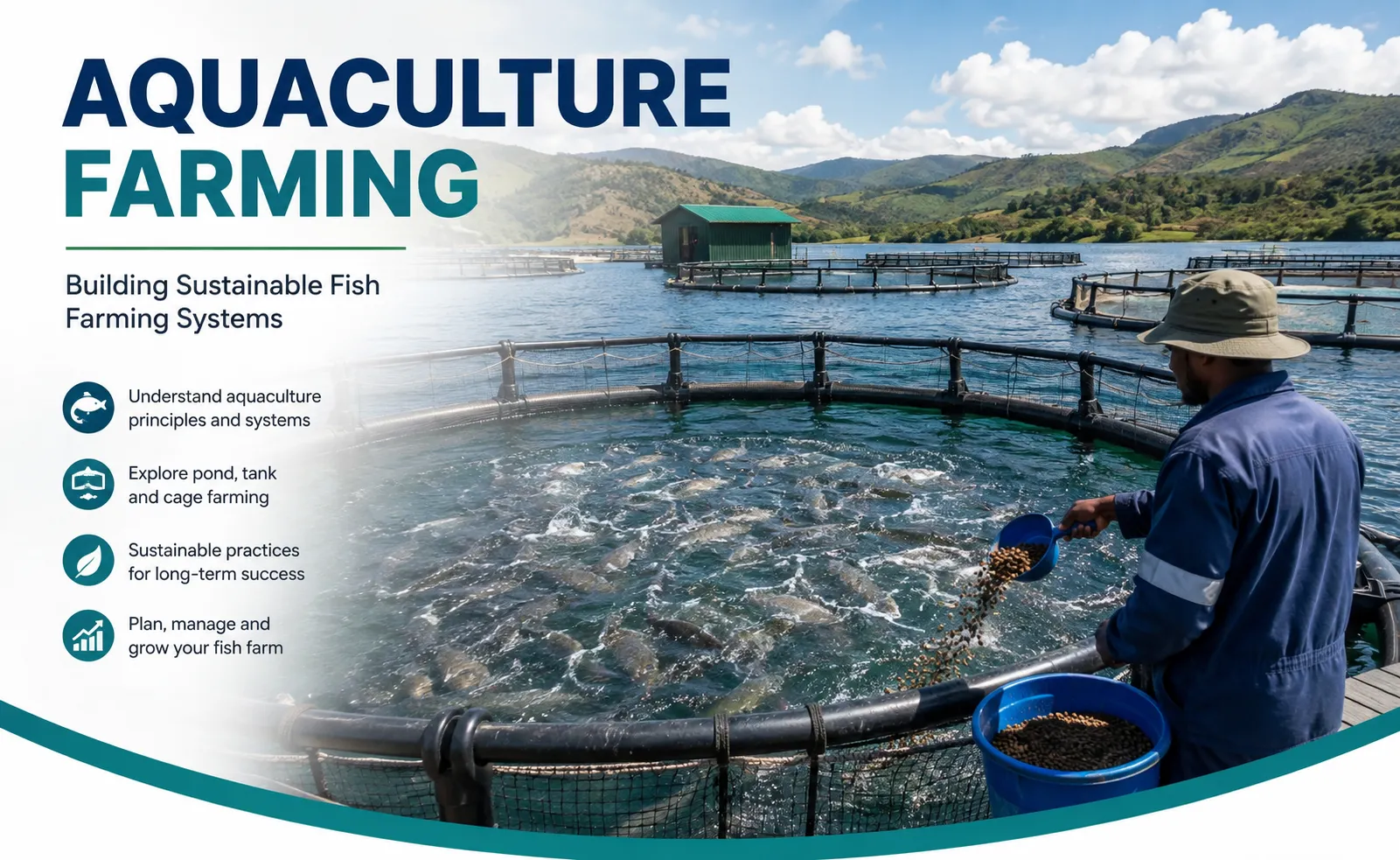
Aquaculture is the controlled farming of animals and plants that live in water. While the term is commonly associated with fish farming, aquaculture can also include the production of shellfish, abalone, seaweed and other aquatic species.
Unlike traditional fishing, where fish are harvested from natural populations in rivers, dams, lakes or oceans, aquaculture involves actively raising aquatic species under managed conditions. Farmers control important aspects of production such as feeding, water quality, stocking, growth and harvesting.
Why Is Aquaculture Important to South Africa?
South Africa has significant aquaculture potential because of its extensive coastline, freshwater resources and range of climatic regions. This creates opportunities for both freshwater and marine aquaculture.
Food Security
Responsible aquaculture can help provide a reliable supply of nutritious seafood while reducing pressure on wild fish populations.
Employment
The industry can create jobs on farms as well as in hatcheries, feed manufacturing, logistics, processing and technical services.
Rural Development
Small-scale aquaculture can support food production, additional income and business development in rural communities.
Entrepreneurship
Business opportunities extend well beyond owning a fish farm and include services, equipment, processing, logistics and training.
What Fish Can Be Farmed in South Africa?
Different species require different temperatures, water conditions and production systems. Freshwater opportunities covered in the course include species such as tilapia, African catfish, trout, carp and ornamental fish.
South Africa’s coastline also creates opportunities for marine aquaculture involving products such as abalone, oysters, mussels, seaweed and marine finfish.
Different Ways of Farming Fish
There is no single fish farming system that suits every farmer or every species. Aquaculture can use several different production methods, including:
- Earthen ponds
- Plastic-lined ponds
- Concrete ponds
- Tanks
- Raceways
- Cage systems
- Recirculating Aquaculture Systems (RAS)
- Biofloc systems
- Aquaponics
Each system has its own requirements, benefits and challenges, which makes it important to understand production methods before making significant investments.
Modern Technology Is Changing Fish Farming
Aquaculture is becoming increasingly technology-driven. Modern operations can use water-quality sensors, automatic feeding systems, disease monitoring, selective breeding, renewable energy and advanced water-management systems.
Recirculating Aquaculture Systems, commonly known as RAS, allow water to be filtered, treated and reused within the farming system. Biofloc technology and aquaponics are further examples of how aquaculture can improve the use of water and nutrients.
Sustainable Fish Farming Matters
Successful aquaculture is not simply about producing as many fish as possible. Long-term success requires responsible management of water, feed, fish health, waste and the surrounding environment.
The course also introduces Feed Conversion Ratio (FCR), which measures how efficiently fish convert feed into body weight. Because feed is a major production cost, understanding feed efficiency can have an important effect on the viability of an aquaculture operation.
Aquaculture Is More Than Owning a Fish Farm
The aquaculture value chain creates opportunities in many supporting industries. Entrepreneurs can become involved in areas such as:
- Hatcheries and fingerling production
- Fish feed manufacturing
- Pumps, aeration systems and tanks
- Water-quality testing
- Fish health services
- Processing and packaging
- Cold storage
- Transport and logistics
- Marketing and sales
- Aquaculture consulting
- Training and education
Small-Scale vs Commercial Aquaculture
Not every aquaculture operation needs to begin as a large commercial farm. Small-scale farmers may investigate backyard ponds, lined ponds, tank systems, aquaponics or biofloc systems.
Starting smaller can provide an opportunity to gain practical experience before expanding production. Commercial aquaculture may include large pond farms, cage culture operations, intensive RAS facilities, hatcheries, processing facilities and export businesses.
Learning the Fundamentals Before Investing
Aquaculture can offer exciting opportunities, but establishing a fish farm without understanding the industry can also involve considerable risk. Water availability, species selection, feeding, environmental conditions, production systems, markets, operating costs and business planning can all influence whether an aquaculture operation succeeds.
Building foundational knowledge before making significant investments can therefore be extremely valuable.
Introducing the Aquaculture Farming Online Course
The Aquaculture Farming Online Course from Fish Farming South Africa provides an introduction to the industry for people who want to build their knowledge from the ground up.
Module 1: Introduction to Aquaculture
Learn what aquaculture is, its objectives and terminology, its history and its development within South Africa.
Module 2: The Importance of Aquaculture
Explore food security, nutrition, employment, sustainability, FCR, exports, business opportunities, innovation and industry challenges.
Module 3: Aquaculture Opportunities in South Africa
Discover freshwater and marine farming, production systems, provincial opportunities, commercial growth, government support and entrepreneurship.
South Africa-Focused Learning
The training is designed around local industry conditions, opportunities, farming systems and the broader South African aquaculture sector.
Who Is the Course For?
The course is suitable for aspiring fish farmers, small-scale farmers, entrepreneurs, commercial farmers investigating aquaculture, rural development projects and people interested in working elsewhere within the aquaculture value chain.
Because it begins with foundational concepts, learners do not need advanced aquaculture knowledge before starting.
Study Fish Farming Online – 24 Hours a Day
The Aquaculture Farming course can be accessed 24 hours a day, 7 days a week, allowing learners to work through the training according to their own schedules.
This is particularly useful for people who are already employed, running businesses or actively farming.
Receive a Certificate of Completion
Learners who successfully complete the required course material and assessments receive a Certificate of Completion.
The certificate recognises that the learner has worked through structured introductory training covering aquaculture and the South African industry.
Is Aquaculture the Right Opportunity for You?
Aquaculture can present opportunities, but successful fish farming requires knowledge, planning, suitable resources, appropriate species, reliable markets and responsible management.
Start Your Aquaculture Farming Training Online
Learn about the industry, understand why aquaculture matters, explore different farming systems and discover opportunities throughout the aquaculture value chain. Study online 24/7 and receive a Certificate of Completion after successful completion.
View the Aquaculture Farming Online Course